Rust solo survival in 2026 means holding an OP monument against the whole neighborhood
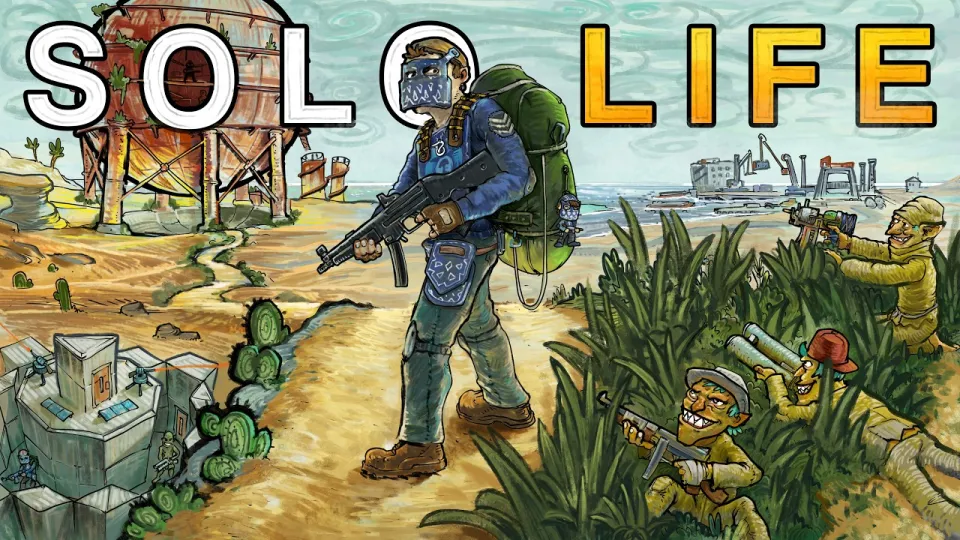
Video: Rust - THE SOLO LIFE V16
Need articles like this for your video? They help promote it on YouTube and Google — order them in the Telegram bot @sat_sit_bot. It writes articles around your video, embeds the video and publishes them on popular niche websites (no ads). Free trial — 50 articles.
· based on the channel Blooprint
Rust solo survival in 2026 is about picking one high-value monument, building next to it, and defending that position alone against groups that outnumber you. The core loop has not changed: farm fast, claim the monument first, keep your base small and cheap, and treat every neighbor as a potential raider. Blooprint's The Solo Life V16 shows exactly that pattern — a solo player holding an OP monument while several angry neighbors try to push him off it. If you want to try War Thunder between wipes, you can grab the free bonus through the Blooprint War Thunder registration link.
What a solo monument hold actually requires in Rust
Holding a monument solo is a logistics problem before it is a PvP problem. The monument gives you loot, recyclers and traffic, but it also paints a target on your base from the first hour of the wipe.
- Scout the monument before you commit — check which puzzles are reachable without a group and where the exits funnel players.
- Build a small footprint base within running distance, ideally with a second stash or bunker for backup kits.
- Farm the monument on a schedule: early morning and late night hours on a busy server mean fewer eyes on you.
- Keep a cheap respawn kit ready so a death costs you minutes, not hours.
- Accept that the neighbors will come — the monument is the reason your solo wipe has content at all.
A solo base near a monument is not a fortress, it is a threat. Groups react to it because a single player with monument loot can snowball into a real problem, and that reaction is where solo PvP happens.
Why neighbors keep attacking one solo player
Groups attacking a solo player are usually losing value, not gaining it. Three or four players spending 10–20 minutes to pressure one base are burning farm time, raid resources and attention that a bigger clan would punish.
That math is the solo player's biggest advantage. Every minute a group camps your door is a minute they are not farming sulfur or defending their own base. The counterplay is patience: stay inside, use the base layout, and let them get bored or get flanked by someone else. Blooprint's episode leans on that dynamic — multiple angry neighbors, one defender, and a lot of wasted group time.
Solo raid defense and the friendly neighbor factor
Solo raid defense is mostly preparation and improvisation, and one good neighbor can flip the result. A defender who knows the base layout, holds angles from inside and keeps spare weapons in reach can stall a raid long enough for help to arrive.
- Pre-place defensive boxes with weapons, ammo and meds near likely breach points.
- Use doors and chokepoints to force raiders into single-file fights.
- Keep a flank route or a secondary exit so you are never fully boxed in.
- Talk to neighbors early; a friendly player nearby is worth more than a turret.
- Expect the raid to come at the worst time — offline protection is a plan, not a guarantee.
In this episode a friendly neighbor turns into a genuine asset during a raid defense, which is a reminder that Rust's social layer is a survival mechanic, not decoration.
Night vision, eoka one-taps and other solo myths
Darkness in Rust is still a real handicap, and night vision does not fully solve it. Players consistently report that even with night vision active, dark scenes remain hard to read — lighting, fog and monitor settings all matter. If you plan night monument runs, test your brightness settings before the wipe and carry a light source you can toggle fast.
Other solo staples are equally overstated. The eoka one-tap is a highlight-reel weapon, not a reliable plan; treat it as a lucky opener, not a strategy. The same goes for parachute plays and cargo jumps — they look spectacular and occasionally pay off, but they are high-variance moves that a solo player should use when the downside is already acceptable.
How to solo in Rust without burning out
Solo Rust is a pacing discipline. The players who last a full wipe are the ones who treat the game as a series of short, low-risk sessions rather than one long grind.
- Set one goal per session: a monument run, a raid, a base upgrade.
- Never carry more than you can afford to lose into a fight you did not choose.
- Recycle aggressively and keep your base stock small so a raid hurts less.
- Log off with kits split across stash spots, not stacked in one box.
- Rotate monuments when a location gets too hot instead of defending a dead position.
Blooprint's solo series works because it shows that loop honestly: the losses, the rebuilds, and the occasional raid defense that goes right.
Useful links
- War Thunder free bonus (PC and consoles): https://wtplay.link/blooprint
- War Thunder mobile: https://wtm.game/blooprint
- Twitch: https://www.twitch.tv/blooprint
- Kick: https://kick.com/blooprint
- TikTok: https://www.tiktok.com/@blooprintgames
What The Solo Life V16 says about solo Rust
The Solo Life V16 is a clean demonstration of what solo Rust rewards: position, patience and social awareness rather than raw aim. Blooprint holds an OP monument, absorbs pressure from multiple neighbors and survives a raid defense with help from an unexpected friendly player. The episode also shows the honest costs — dark nights, wasted fights and the constant risk of being outnumbered. If you want more of this format, the Blooprint channel is where the solo life series continues, and you can support it by picking up War Thunder for free via https://wtplay.link/blooprint.
Key takeaways
- Solo Rust in 2026 is still about claiming one high-value monument and defending it alone against grouped neighbors.
- Blooprint's The Solo Life V16 follows the same formula as earlier episodes: one base, one monument, constant PvP pressure.
- Night vision in Rust remains a meme — viewers still report seeing almost nothing in dark scenes.
- Solo raid defense often works because raiders burn 10–20 minutes of group time on a single target.
- A friendly neighbor can outperform a clan: one helpful player changed the outcome of a raid defense.
Source: Rust - THE SOLO LIFE V16 · Markdown version
Questions & answers
Is it possible to hold a monument completely solo in Rust?
Yes, but only with the right setup. You need a small base close to the monument, a cheap respawn kit and a schedule that avoids peak server hours. The goal is not to win every fight but to make attacking you expensive enough that groups give up.
Why do groups waste so much time attacking one solo player?
Because a solo player near a monument is a threat that can snowball. Groups also tend to overcommit once they start a raid, spending 10–20 minutes on a target that yields little loot. That wasted time is effectively your defense.
Does night vision make night runs safe in Rust?
Not really. Players regularly report that night vision still leaves dark scenes hard to read, especially with fog or poor monitor settings. Test your brightness before the wipe and always carry a toggleable light source.
How important is a friendly neighbor for a solo player?
It can decide a raid. A neighbor who calls out movement, helps flank or brings spare kits turns a one-player defense into a two-player one. Building those relationships early is cheaper than any turret.